























Midvale, UT — Indoor rock climbing is becoming a very popular sport among Utah residents. Indoor gyms offer exercise, enjoyment, or learning experiences before transitioning to outdoor climbing.
But the whole process of getting the right equipment, going to the right gym, or even physically scaling up a wall may seem daunting. Fortunately, the Midvale area offers lots of options to help you navigate the first steps of your indoor climbing adventure.
The closest indoor climbing gym to Hillcrest High School is the Fort Union Momentum, which offers a variety of climbs for any age or skill level. Other popular options for beginners include The Front or Momentum’s Millcreek, Lehi, and Sandy locations.
Coach José is an experienced climbing mentor for Momentum’s youth class. He has some ideas regarding passes and gear for beginners.
“I would just get a climbing pass, at first,” José recommends. “Come climb, even do a two-week trial. Whatever you want to do, use rentals at the gym. Once you start really engaging in the sport, start looking for your own equipment.”
Once you are prepared, it’s important to know what type of climbing you’ll be doing. In most gyms, you will typically find three different types of rock climbing. The first type is top rope, in which you have a harness connected to a rope at the top of the wall. Top rope is generally considered the safest type of climbing, and it’s where most beginners start.
Another version of rope climbing is lead, where you clip your rope into the wall as you go. Lead climbing usually requires more specialized equipment and skill sets, and is done mainly by experienced climbers.
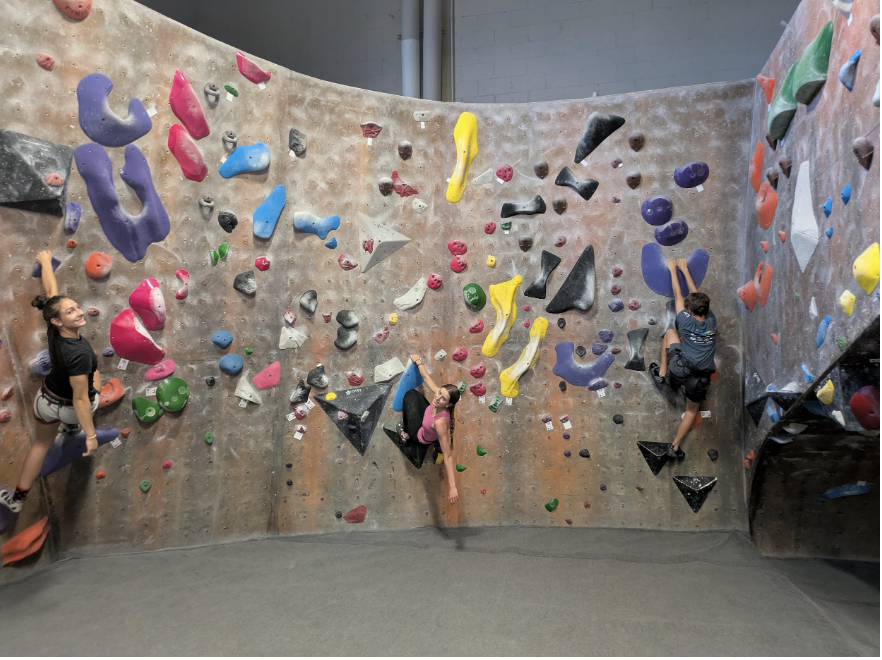
José suggests climbers also try bouldering. Bouldering is a type of climbing with shorter walls and crash pads, so ropes are not used.
The next step is to pick a climbing route that aligns with your skill and comfort level. Climbs are designated with difficulty ratings. The easiest top rope rating is 5.5, and routes are classified as “intro” up to 5.9. Beginner bouldering climbs include V0s, V1s, and V2s.
Before you hop on the wall, it’s beneficial to be aware of common mistakes and good techniques.
“Really focus on not hanging T-Rex style, it will burn your energy,” José says when describing his number one tip. “Focus on your footwork. Just enjoy yourself with what you can climb, and strength will come later.”
Many people new to climbing tend to experience fear as they go up. But with practice and guidance, anyone can conquer that anxiety. “Overcome your feelings inside as you’re on the wall,” José proposes. “Focus deeply on your next execution of the climb. Climbing can be a dangerous sport, but the risk is well worth the reward. It’s overwhelmingly joyful.”
And courage isn’t the only thing rock climbing can help you gain.
“It can really improve hand strength, and getting stronger in general,” Lily Barney says. Barney is a high school student who takes climbing classes four hours a week. “It’s unique because it’s not like fully team sports. You can just do it individually and come to the gym. You don’t have to rely on people if you’re not a people person.”
Whether it’s for fitness or a fun family activity, José and Barney both encourage people to try out the well-rounded, versatile sport of rock climbing.
“Climbing will benefit you in many ways, including your physical endurance and mind,” José says. “Because when you’re looking at the route, you’re solving it, and everybody’s different. Overall, just the aspect of figuring out a route that you’re working on is challenging, and it doesn’t matter which level you climb. It’s peace on the soul and a good problem for the mind.”